

In the early 1920s, the smoke and noise
In the early 1920s, the smoke and noise of commerce at the heart of Indianapolis created a need for residential solutions further from the city center.

Following the advice of nationally recognized landscape architect George Kessler, city officials built wider bridges, widened existing streets, and created new streets to connect the city’s parks. Three segments of the upgraded streets were designated as boulevards and renamed for Mr. Kessler, all of which quickly came in handy with the rise of the automobile.
In anticipation of a suburban housing boom, three prominent Indianapolis businessmen envisioned an upscale neighborhood on the west side of Washington Township, about seven miles from Monument Circle. The partners named the new addition “Northern Estates Section 1,” and divided the acreage into large building sites.


The brick and timbered Tudor Revival home

St. Margaret’s Hospital Guild is pleased to present the residence at 4160 Washington Boulevard as its 2019 Decorators’ Show House and Gardens. This is the second time in the event’s 58-year history that the home has been featured. The property was the location of the Guild’s 19th annual fundraising effort in the spring of 1980.
The brick and timbered Tudor Revival home at 4160 Washington Boulevard was built in 1919 by Clark E. Mallery and Roberta Spellman Mallery. Mr. Mallery was one of the founders of the American Garment Company, a manufacturer of women’s clothing. Mrs. Mallery was the aunt of Mrs. Robert H. Tyndall, wife of the 34th Mayor of Indianapolis.
The architectural firm hired to design the home and supervise its construction was Rubush & Hunter. Established in 1905 and active until 1939, when its principals decided to retire to Florida, the company designed more than 250 structures during its 34 years of existence.
Among the many commercial buildings attributed to Preston C. Rubush (1867-1947) and Edgar O. Hunter (1873-1949) are the former Indianapolis City Hall, several buildings on the campus of the Indiana School for the Deaf, Buckingham Apartments, Circle Theatre, Columbia Club, Illinois Building, Guaranty Building, Indiana Theatre, Indiana State Fairgrounds Coliseum, Madam C. J. Walker Building, and Circle Tower Building. Residences designed by Rubush & Hunter can be found in several Indianapolis neighborhoods, including the Old Northside, Herron-Morton Place, Meridian Park, Meridian-Kessler, Irvington, Butler-Tarkington, and Woodruff Place.

In anticipation of a suburban housing boom
In the early 1920s, the smoke and noise of commerce at the heart of Indianapolis created a need for residential solutions further from the city center.

Following the advice of nationally recognized landscape architect George Kessler, city officials built wider bridges, widened existing streets, and created new streets to connect the city’s parks. Three segments of the upgraded streets were designated as boulevards and renamed for Mr. Kessler, all of which quickly came in handy with the rise of the automobile.
In anticipation of a suburban housing boom, three prominent Indianapolis businessmen envisioned an upscale neighborhood on the west side of Washington Township, about seven miles from Monument Circle. The partners named the new addition “Northern Estates Section 1,” and divided the acreage into large building sites.

The brick and timbered Tudor Revival home
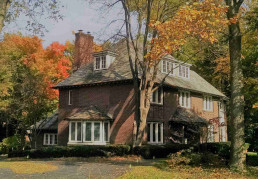
St. Margaret’s Hospital Guild is pleased to present the residence at 4160 Washington Boulevard as its 2019 Decorators’ Show House and Gardens. This is the second time in the event’s 58-year history that the home has been featured. The property was the location of the Guild’s 19th annual fundraising effort in the spring of 1980.
The brick and timbered Tudor Revival home at 4160 Washington Boulevard was built in 1919 by Clark E. Mallery and Roberta Spellman Mallery. Mr. Mallery was one of the founders of the American Garment Company, a manufacturer of women’s clothing. Mrs. Mallery was the aunt of Mrs. Robert H. Tyndall, wife of the 34th Mayor of Indianapolis.
The architectural firm hired to design the home and supervise its construction was Rubush & Hunter. Established in 1905 and active until 1939, when its principals decided to retire to Florida, the company designed more than 250 structures during its 34 years of existence.
Among the many commercial buildings attributed to Preston C. Rubush (1867-1947) and Edgar O. Hunter (1873-1949) are the former Indianapolis City Hall, several buildings on the campus of the Indiana School for the Deaf, Buckingham Apartments, Circle Theatre, Columbia Club, Illinois Building, Guaranty Building, Indiana Theatre, Indiana State Fairgrounds Coliseum, Madam C. J. Walker Building, and Circle Tower Building. Residences designed by Rubush & Hunter can be found in several Indianapolis neighborhoods, including the Old Northside, Herron-Morton Place, Meridian Park, Meridian-Kessler, Irvington, Butler-Tarkington, and Woodruff Place.

In the early 1920s, the smoke and noise
In the early 1920s, the smoke and noise of commerce at the heart of Indianapolis created a need for residential solutions further from the city center.
Following the advice of nationally recognized landscape architect George Kessler, city officials built wider bridges, widened existing streets, and created new streets to connect the city’s parks. Three segments of the upgraded streets were designated as boulevards and renamed for Mr. Kessler, all of which quickly came in handy with the rise of the automobile.
In anticipation of a suburban housing boom, three prominent Indianapolis businessmen envisioned an upscale neighborhood on the west side of Washington Township, about seven miles from Monument Circle. The partners named the new addition “Northern Estates Section 1,” and divided the acreage into large building sites.